HDPE Garbage Bags Manufacturer in India
HDPE garbage bags are manufactured from high-density polyethylene, a stiffer and higher-tensile material than standard LDPE. They suit specific applications where puncture resistance at lower film weight matters more than flexibility. This page covers when HDPE is the right choice and when heavy-gauge LDPE is the better option.
View our full range on the recycled garbage bags product page.
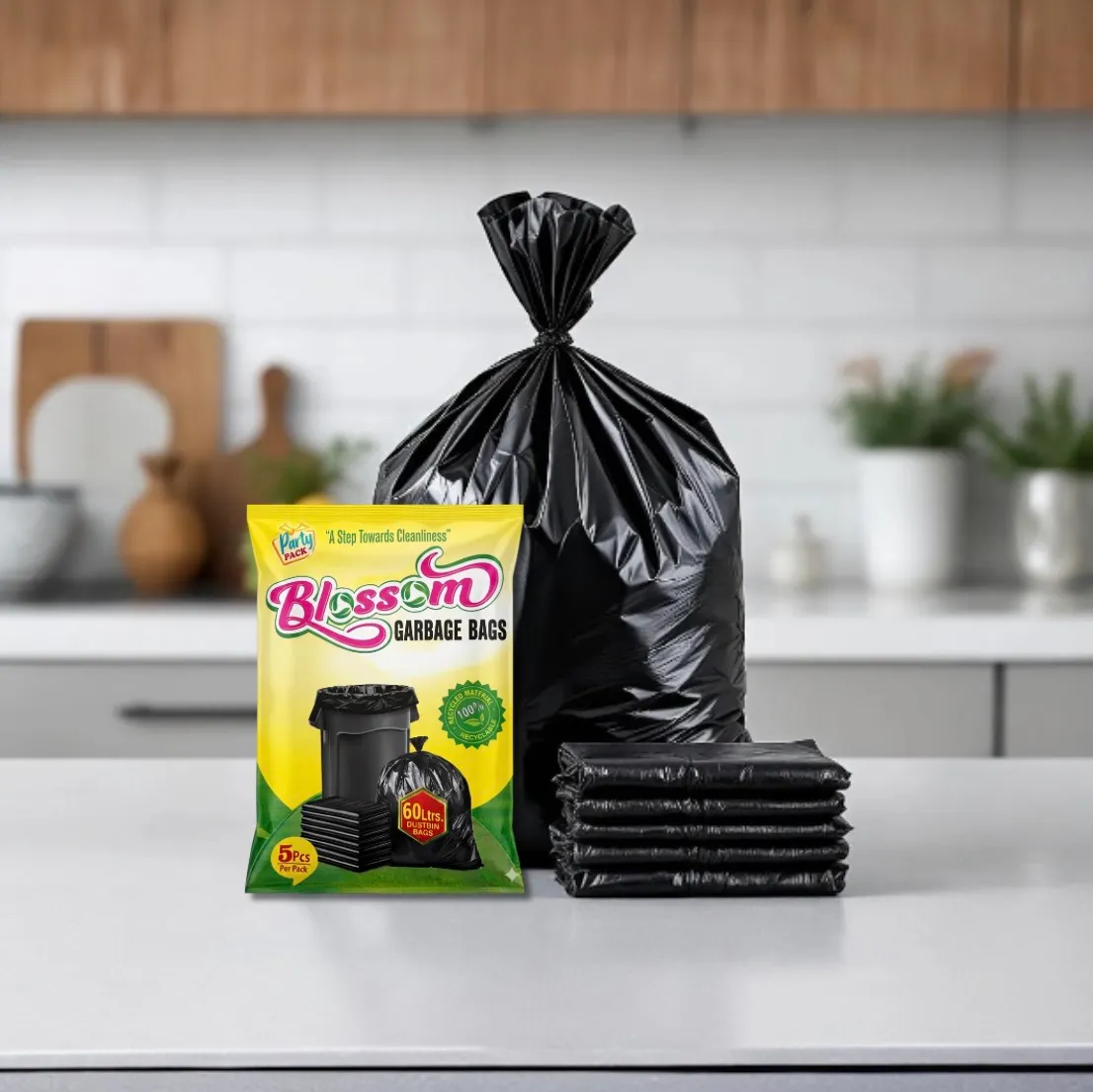
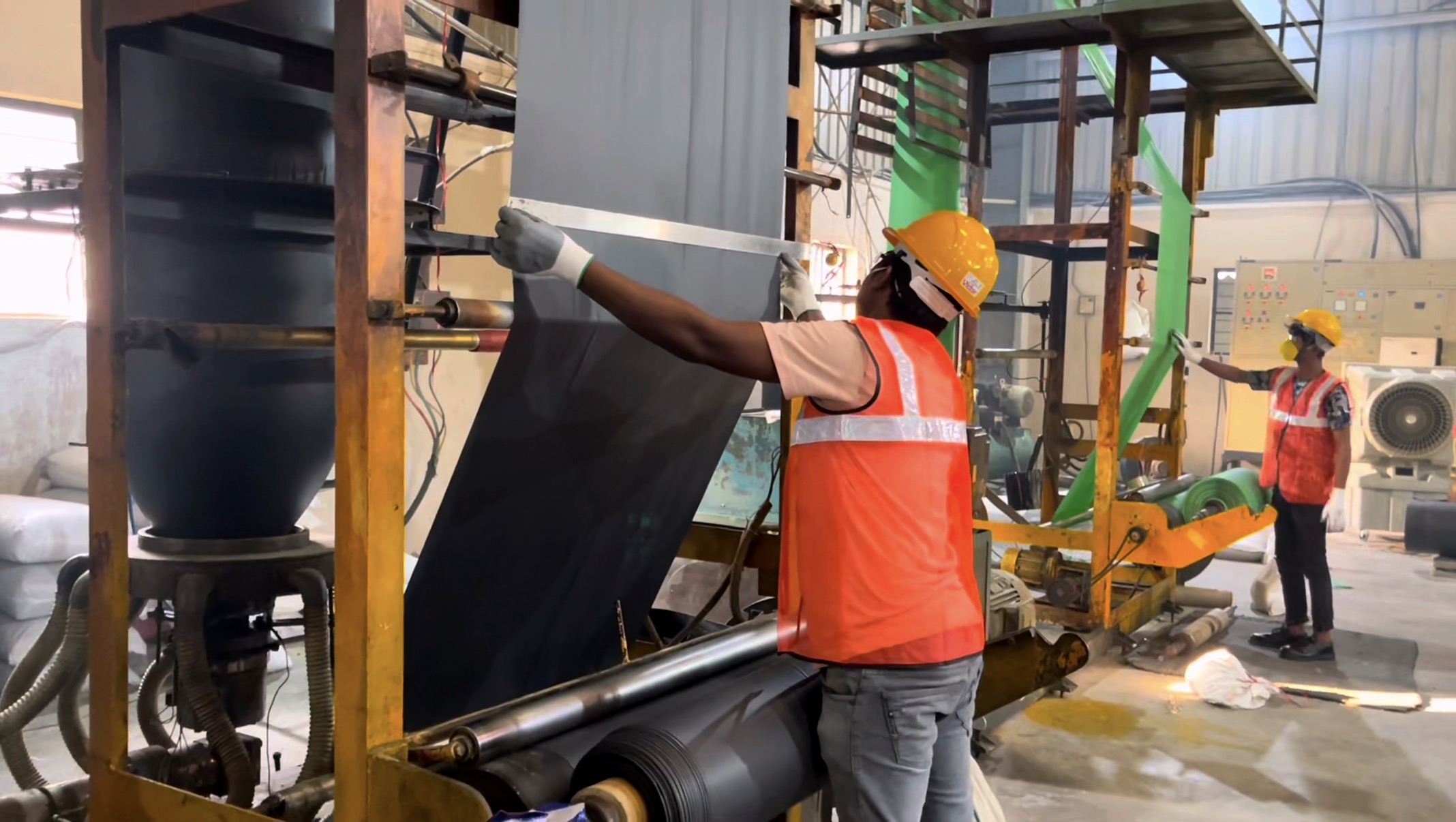
High density. High strength. Consistent output.
Our extrusion lines process both HDPE and LDPE at controlled temperatures for consistent output. Same facility, same quality management system. Both materials available on one order.
HDPE vs LDPE Garbage Bags: The Material Difference
HDPE, high-density polyethylene, has a tighter molecular structure than LDPE, producing a stiffer film with higher tensile strength per unit thickness. LDPE, low-density polyethylene, is softer, more flexible and more stretch-resistant. HDPE suits applications where puncture resistance is critical and rigidity is not a problem: thin-gauge bags for municipal waste collection, industrial packaging applications where strength-to-weight ratio matters, construction site bags where sharp debris requires puncture resistance at lower cost per bag. LDPE suits applications where flexibility is critical: kitchen waste where the bag needs to stretch without tearing, clinical waste where bags are filled and tied under pressure, commercial bins where the bag must conform to irregular waste shapes. In Indian commercial waste management, LDPE dominates because flexibility and moisture resistance are more relevant than raw tensile strength for most applications. Buyers specifying HDPE should confirm the material genuinely suits their waste type before ordering.
Applications for HDPE Garbage Bags
Construction waste removal is the strongest HDPE application: sharp debris from demolition and renovation, broken tiles, concrete fragments and metal offcuts require puncture resistance that thinner HDPE provides more cost-effectively than equivalent LDPE. Industrial floor waste at factories where material offcuts are sharp and irregular is another genuine HDPE application. Municipal waste collection where very large volumes of thin-gauge bags are needed per collection route benefits from HDPE's higher strength-to-weight ratio. For buyers who have specified HDPE but whose application is actually wet kitchen waste, heavy commercial refuse or clinical material, heavy-gauge LDPE with star seal construction will often perform better. LDPE stretches under load rather than tearing; HDPE can crack or split when filled beyond its tensile limit under dynamic conditions like bin lifting. We can supply samples of both materials in comparable gauges so buyers can confirm which performs better in their specific operation before committing.
HDPE Garbage Bag Manufacturing at Ushakiran Ecoplast
Our Hyderabad facility at IDA Mankhal produces both HDPE and LDPE garbage bags, which means buyers who need both materials for different waste streams deal with a single manufacturer. ISO certified quality management covers both product lines. Custom gauge is available for HDPE bags across light, medium and heavy-duty specifications. Custom dimensions are available for non-standard bin formats. For buyers currently using HDPE who have not compared performance against LDPE in their specific application, we dispatch comparison samples so you can test both under your actual conditions before committing to a bulk order. 12 years of manufacturing experience means our production team understands the material behaviour differences and can advise on specification before production runs. Pan-India supply from Hyderabad covers all major industrial markets. See full specifications at the recycled garbage bags product page.
See full product specifications on our recycled garbage bags page.
Frequently Asked Questions
Ready to order garbage bags?
We manufacture to your exact specification, size, colour and quantity. Delivery across Telangana, Andhra Pradesh and pan-India from our Hyderabad facility. View our full recycled garbage bags range or contact us directly.